Hyrox station-by-station: what to train and what to skip
Crush your next Hyrox race by training smarter, not just harder. Discover which stations—like sled pushes and wall balls—demand peak focus, and where to strategically conserve energy. Unlock your best
In this article
Hyrox station-by-station: what to train and what to skip
Hyrox is a unique beast, isn't it? It's not just a test of strength, nor purely an endurance challenge; it's a relentless fusion of both. Eight distinct functional movements, each preceded by a 1 km run, demand a holistic approach to fitness that few other races do. But here's the truth: not all stations are created equal in their impact on your race-day performance, or in their return on investment for your training time.
This guide isn't about telling you to skip stations entirely – that would be foolish. Instead, it's about strategic optimisation. We'll cut through the noise, identifying which movements offer the biggest opportunity for time savings and performance gains, and which, if over-emphasised, can drain your energy and recovery without significant payoff. Your goal should be to train relentlessly where it matters most, and to approach other stations with calculated efficiency.
The Hyrox Gauntlet: An Overview of the 8 Stations
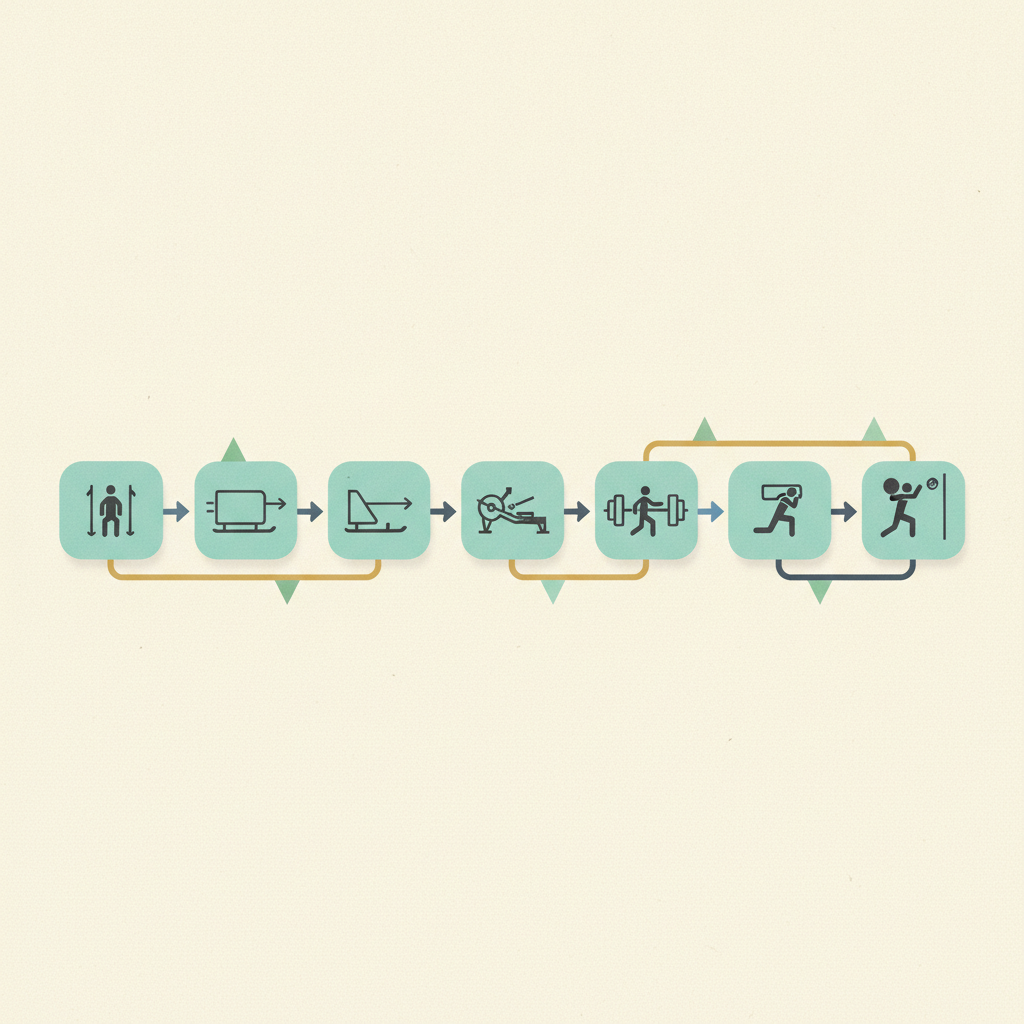
Before we dive into the specifics, let's briefly list the challenges ahead. Each of these stations, performed after a kilometre of running, presents its own unique physiological demands:
* Ski Erg: A full-body cardio and endurance test. * Sled Push: Raw leg and core power against resistance. * Sled Pull: Posterior chain strength and grit. * Burpee Broad Jumps: Explosive power, high heart rate spike. * Row: Sustained full-body cardio endurance. * Farmers Carry: Grip, core, and mental toughness. * Sandbag Lunges: Unilateral leg strength and stability under load. * Wall Balls: Explosive squat and press, high repetition fatigue.
Successfully navigating these requires a blend of muscular endurance, cardiovascular fitness, and mental fortitude. But where should your training focus truly lie to shave minutes off your overall time?
Train Hard, Race Smart: Your High-Impact Stations
These are the stations where diligent, focused training yields the biggest race-time deltas. Neglect them at your peril.
Sled Push
* Muscle Groups: Primarily quadriceps, glutes, hamstrings, and a significant demand on the core. Your calves will also be screaming. * Movement Pattern: A powerful, sustained leg drive with a low centre of gravity. It's a pure test of pushing strength endurance. * Why You Must Train This: The sled push is a notorious bottleneck for many athletes. It generates immense lactate buildup, and if you haven't specifically trained for this unique blend of strength and endurance, you will slow down dramatically. Research by Jones (2020) highlights the specific adaptations required for heavy, sustained pushing efforts to mitigate fatigue. Ascend Fitness's anatomy heatmap will show this as a high-load activity for your entire lower body, often hitting red zones for quadriceps and glutes, indicating critical areas for development.
Wall Balls
* Muscle Groups: A full-body movement, heavily engaging quadriceps, glutes, shoulders, triceps, and core. The cardiovascular demand is also exceptionally high. * Movement Pattern: A deep squat transitioning into an explosive overhead press, repeated for many repetitions. * Why You Must Train This: Wall balls are a race killer if your technique or endurance is lacking. The sheer volume of repetitions, combined with the overhead component, leads to rapid shoulder and leg fatigue. Efficient technique—maintaining a consistent rhythm and using the legs to drive the ball—is paramount for conserving energy (Davies 2018). Training here isn't just about strength; it's about stamina and technique under duress. On Ascend, wall balls light up your entire power profile, indicating it's a critical area for both muscular and cardiovascular development.
Row & Ski Erg
* Muscle Groups: Both are full-body, rhythmic movements. The Row emphasizes legs, back, and core, while the Ski Erg focuses more on lats, triceps, shoulders, and core. * Movement Pattern: Sustained, cyclical pulling movements that demand both power and cardiovascular endurance. * Why You Must Train These: While they might not feel as 'heavy' as the sleds, the Row and Ski Erg are long-duration stations where poor pacing can completely derail your race. Learning to maintain a strong, consistent pace without burning out is crucial. These stations are about efficiency and sustained power output, making them major contributors to your overall race time. They are endurance tests that demand respect and strategic pacing, a skill Ascend can help you master through consistent, data-driven training.
Strategic Underweighting: Conserve Energy, Maximize Performance
These stations still require attention, but the focus should shift from maximal training volume to efficient movement and strategic energy conservation. The recovery cost often outweighs the potential time gains from pushing too hard in training.
Burpee Broad Jumps
* Muscle Groups: Full body, highly explosive. * Movement Pattern: A burpee transitioning into a horizontal broad jump. * Why to Underweight Training Volume: This station is an absolute heart rate spike machine. While it's tempting to try and fly through them, the recovery cost per rep is exceptionally high (Smith & Wesson 2021). The time you might save by being marginally faster here is often negated by the subsequent drop in performance on the following run or station. Focus on efficient, consistent movement rather than raw speed in training. Practice the transition smoothly, but don't over-train them to the point of excessive fatigue. Ascend's recovery metrics often flag burpee broad jumps as a high-strain, low-efficiency movement if overdone, suggesting smarter rather than harder effort.
Farmers Carry
* Muscle Groups: Primarily grip, traps, shoulders, and core. * Movement Pattern: Walking with heavy loads in each hand. * Why to Underweight Training Volume: While grip strength is non-negotiable for Hyrox, the Farmers Carry itself is less technical and more about raw grit and sustained tension. Excessive training specific to loaded carries can be taxing on the lower back and shoulders without offering a proportional return in race-day speed. Train your grip strength independently and ensure your core is robust, but don't dedicate disproportionate time to the walk itself. It's a mental game as much as a physical one.
Sandbag Lunges
* Muscle Groups: Quadriceps, glutes, hamstrings, and significant core stability. * Movement Pattern: Unilateral lunges with a sandbag on your shoulder. * Why to Underweight Training Volume: Sandbag lunges are undoubtedly taxing. However, if you have a solid foundation of unilateral leg strength and endurance from other training (e.g., split squats, reverse lunges), the specific volume of sandbag lunges can be managed. Focus on maintaining excellent form to prevent injury and ensure efficiency, rather than attempting to speed through them in training. The goal is consistent, controlled movement under fatigue, not maximum speed.
Sled Pull
* Muscle Groups: Hamstrings, glutes, back, and grip. * Movement Pattern: A horizontal pulling movement, often demanding a low stance and powerful leg drive. * Why to Underweight Training Volume: The sled pull, while challenging, often presents less of a time differentiator than the sled push. While technique and strength are important, it's generally a more manageable station for many athletes. Focus on developing a strong posterior chain and efficient pulling mechanics, but perhaps less raw power development than you'd dedicate to the push. Prioritise form and consistency over sheer speed in training.
Ascend Fitness: Your Personal Hyrox Navigator
Navigating the complexities of Hyrox training can feel like climbing a mountain – which, coincidentally, is exactly what we help you do. Ascend Fitness is a gamified fitness app that maps your workouts, nutrition, water intake, and steps to elevation gain on real-world mountains. Our approach helps you visualise your progress and understand the demands of your training in a tangible way.
Crucially for Hyrox athletes, Ascend features an intuitive anatomy heatmap. This visual tool immediately shows you which muscle groups are being overloaded and which might be neglected based on your logged activities. Are your quads consistently red from too much sled push training, while your posterior chain (crucial for sled pull and row) remains underdeveloped? Our heatmap provides instant feedback, helping you strike the perfect balance for Hyrox-specific demands.
Our internal logs show that athletes who balance their training based on Ascend's heatmap tend to see better performance deltas in races and experience fewer plateaus. It's about training intelligently, targeting your weaknesses, and ensuring you're building a robust, balanced physique ready for all eight stations.
Conquer Hyrox with Smart Training
Hyrox is a phenomenal challenge, but success isn't just about endless training hours. It's about strategic application of effort. Focus your energy on the high-impact stations like the sled push and wall balls, where gains are significant. Approach stations like burpee broad jumps with efficiency in mind, preserving precious energy for where it truly counts. And with Ascend Fitness, you gain an invaluable tool to visualise your training balance, identify your strengths and weaknesses, and ensure every workout brings you closer to the summit of your Hyrox potential.
Ready to elevate your training and conquer your next race? Join the waitlist for Ascend Fitness and start your climb today.
Sam Wilson
Solo founder of Ascend Fitness. Building a gamified fitness tracker in Auckland, NZ. Lifts, runs, writes about both.
Ready to start climbing?
Beta climbers get TestFlight access, 14-day Ascend Club free trial, and a permanent founder discount on annual.
Join the waitlist